

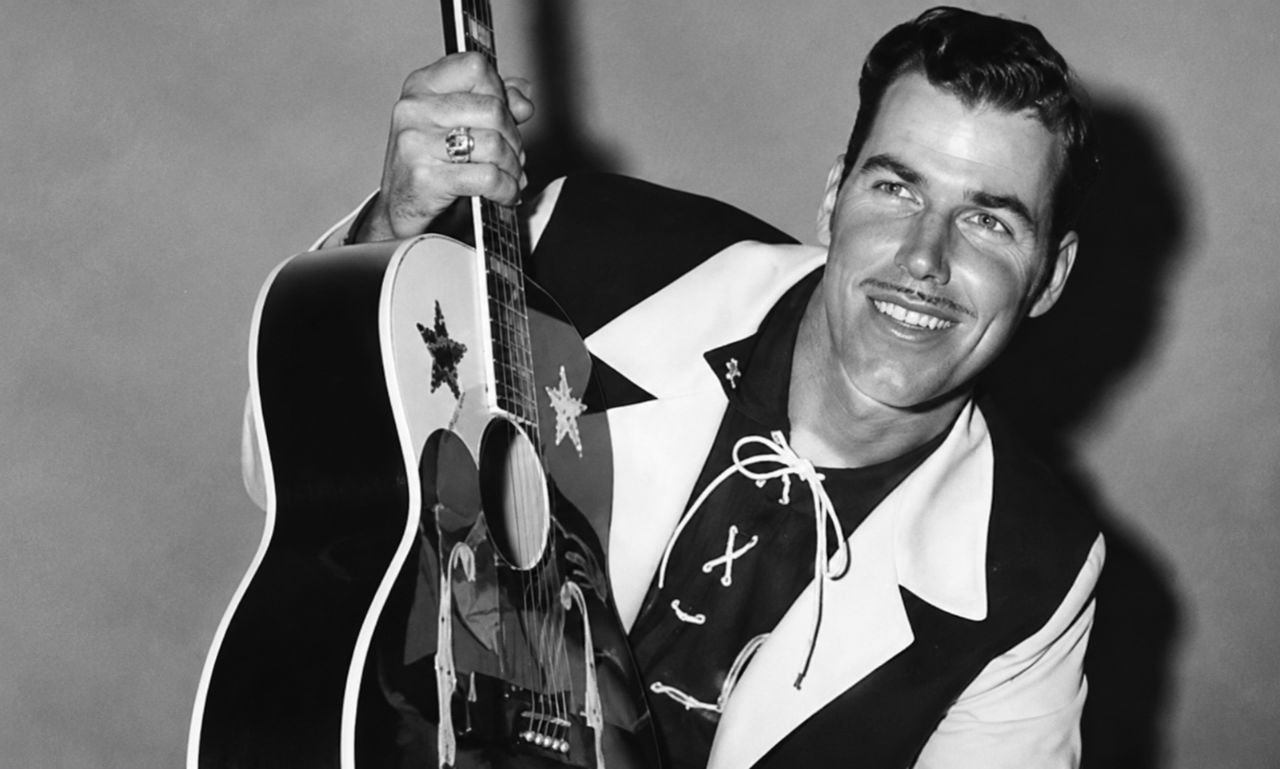
Slim Whitman was an American country music singer, songwriter, and guitarist whose distinctive falsetto and yodeling voice made him internationally famous. Slim Whitman net worth is estimated at $50 million in 2026, according to Celebrity Net Worth. However, this figure is an unofficial estimate rather than a verified valuation of his estate.
Born Ottis Dewey Whitman Jr., he built a successful music career spanning several decades, selling millions of recordings and performing for audiences across the United States, United Kingdom, Australia, and other countries. His financial success came primarily from record sales, live performances, and the commercial revival of his music through television advertising.
Whitman’s recording of “Rose Marie” became a historic British chart success, while his greatest-hits collection All My Best introduced his music to a new generation of American listeners. This article explores his estimated wealth, career earnings, income sources, personal life, achievements, and lasting financial legacy.
Slim Whitman Quick Facts
| Category | Details |
| Full Name | Ottis Dewey Whitman Jr. |
| Professional Name | Slim Whitman |
| Date of Birth | January 20, 1923 |
| Date of Death | June 19, 2013 |
| Age at Death | 90 years |
| Birthplace | Tampa, Florida, USA |
| Nationality | American |
| Profession | Singer, songwriter, guitarist |
| Genres | Country, Western, Folk |
| Years Active | Late 1940s–2000s |
| Estimated Net Worth | $50 million (unverified estimate) |
| Main Income Sources | Record sales, albums, concerts, music-related royalties |
| Wife | Alma Geraldine “Jerry” Crist |
| Children | Sharron and Byron |
| Famous Songs | “Rose Marie,” “Indian Love Call,” “Secret Love” |
| Notable Recognition | Hollywood Walk of Fame |
Slim Whitman Net Worth in 2026
The estimated Slim Whitman net worth in 2026 is $50 million, based on the figure published by Celebrity Net Worth. Worthova also reports the same estimate in its 2026 article. Although this figure is frequently repeated online, there is no publicly available financial statement establishing that Whitman personally accumulated exactly $50 million. His complete estate valuation, liabilities, music-rights ownership, and inheritance arrangements have not been established through publicly available financial records. Consequently, the $50 million figure should be understood as a third-party celebrity wealth estimate rather than a confirmed financial fact.
What Contributed to Slim Whitman’s Wealth?
Whitman’s financial success was closely connected to his unusually long recording career and international popularity.
His main commercial activities included:
- Record sales: His recordings sold millions of copies throughout his career.
- Album releases: He released numerous albums, compilations, and music collections.
- Live performances: He toured internationally and performed for audiences in several countries.
- Television marketing: His All My Best compilation became a major commercial success through direct-response television advertising.
- Music-related rights: His recorded catalog and songwriting activities formed part of his professional music business.
These activities help explain his commercial success, although the amount he personally retained from each activity is unknown.
Why Is His Net Worth Difficult to Verify?
A celebrity’s net worth is not simply the total value of records sold or concert tickets purchased. An artist’s actual wealth depends on several financial factors, including recording contracts, royalty arrangements, music publishing rights, management expenses, taxes, personal spending, property, investments, and outstanding liabilities.
Without Whitman’s complete financial records, calculating his exact personal wealth is impossible. The available evidence supports a successful commercial career, but it does not independently establish the $50 million valuation.
Who Was Slim Whitman?
Slim Whitman was a country and Western singer recognized for his unusually high singing voice, smooth falsetto, and distinctive yodeling technique. His musical identity was different from that of many traditional country performers. Rather than concentrating exclusively on honky-tonk songs, Whitman frequently performed romantic ballads, cowboy songs, gospel music, and popular standards.
He became especially successful in Britain and Europe, where his recordings attracted a substantial audience. His influence also extended to later generations of musicians, including members of the Beatles. Whitman’s career demonstrated that a country performer could develop an international audience without following every musical trend of the time. He became known as “The Smilin’ Starduster,” a nickname associated with his recognizable stage appearance and approachable public personality.
Some of his most recognizable recordings include:
- “Indian Love Call”
- “Rose Marie”
- “Secret Love”
- “Love Song of the Waterfall”
- “Singing Hills”
- “Danny Boy”
- “Red River Valley”
- “I’ll Take You Home Again, Kathleen”
These recordings helped establish his position as one of the distinctive voices in traditional country and Western music.
Early Life and Family Background
Slim Whitman was born on January 20, 1923, in Tampa, Florida, as Ottis Dewey Whitman Jr. He grew up in a family where music gradually became an important part of his interests. As a child, he enjoyed listening to country performers, particularly Jimmie Rodgers and Gene Autry.
Jimmie Rodgers was especially influential because of his recognizable yodeling style. Whitman developed an interest in the technique and eventually incorporated it into his own singing. His early ambitions were not limited to music. He reportedly considered professional baseball and boxing before establishing himself as a singer.
His Early Working Life
Whitman’s path to musical success was not immediate. Before becoming a professional recording artist, he worked in several occupations, including meatpacking, shipyard employment, and mail delivery.
He also experienced a serious workplace accident that resulted in the loss of two fingers on his left hand. Despite these difficulties, he continued pursuing his interests in music.
During World War II, Whitman served in the United States Navy in the South Pacific. His military experience became an important part of his early adult life, and he entertained fellow servicemen by singing. After returning from military service, he gradually moved toward a professional music career.
How Slim Whitman Started His Music Career
Whitman’s professional music career began developing in the late 1940s. After returning from military service, he worked around Tampa and began performing on local radio stations. These appearances allowed him to develop his singing skills and introduce his voice to a wider audience.
He eventually formed a supporting musical group known as the Variety Rhythm Boys. One of the most important developments in his early career was meeting Colonel Tom Parker, who would later become famous as Elvis Presley’s manager.
Parker heard Whitman singing on Tampa radio station WFLA and recognized his potential. With Parker’s assistance, Whitman secured a recording contract with RCA Records in 1948. The record label encouraged him to use the stage name Slim rather than his original first name. This decision marked the beginning of a professional identity that would eventually become recognizable to country music fans around the world.
His First Recordings
Whitman’s early RCA recordings helped him gain exposure in the country music market. His first single, “I’m Casting My Lasso Towards the Sky,” became associated with his early performing identity. He also appeared on the Mutual Network’s Smokey Mountain Hayride and later joined the influential radio program Louisiana Hayride.
Although these opportunities provided exposure, commercial success did not happen immediately. At one stage, he reportedly had to take additional employment as a mail carrier while continuing to pursue his musical ambitions. His experience illustrates how difficult it could be for recording artists to establish a stable income during the early stages of their careers.
Career Breakthrough and International Success
The early 1950s transformed Slim Whitman’s career. His recordings began attracting attention on country radio, and his distinctive vocal style helped him stand apart from other performers. One of his first important successes was “Love Song of the Waterfall,” which reached the country music charts.
He followed this with “Indian Love Call,” a recording that became one of his signature songs. The track reached the Billboard pop Top 10 and helped introduce his music to listeners beyond the traditional country audience. Other successful recordings included “Keep It a Secret,” “Secret Love,” and “Singing Hills.”
The Success of Rose Marie
“Rose Marie” became one of the defining achievements of Whitman’s career. His recording became a major hit in the United Kingdom in 1955, reaching number one on the official UK Singles Chart. According to the Official Charts Company, the recording spent 11 weeks at number one and remained on the chart for 19 weeks.
This achievement helped establish Whitman as an international country music star. The song’s commercial success was particularly important because British audiences were developing an increasing interest in American country and Western music. Whitman benefited from this growing popularity and became one of the early American country performers to attract a significant following in Britain.
Performing at the London Palladium
In 1956, Whitman became one of the first country music performers to appear at the famous London Palladium. This was an important achievement because the venue was associated with major international entertainment personalities.
His British popularity continued through the late 1950s and early 1960s, with recordings such as “Tumbling Tumbleweeds,” “Unchain My Heart,” and “I’ll Take You Home Again, Kathleen.” His international success helped create commercial opportunities that extended beyond the American music market.
How Did Slim Whitman Make His Money?
Slim Whitman’s estimated wealth was primarily associated with his professional music career. Unlike celebrities who build wealth through large business corporations or publicly traded investments, Whitman’s documented commercial activities were concentrated in music recording, live entertainment, and promotional campaigns. His career generated several potential income streams.
1. Record and Album Sales
Record sales were an important component of Whitman’s professional success. He released numerous albums and recorded hundreds of songs across different musical styles. His recordings attracted listeners in the United States, United Kingdom, Australia, and other international markets. His successful songs and albums helped establish his reputation and provided opportunities for continued commercial releases.
The Washington Post reported that Whitman sold more than 70 million recordings during his career. Some other accounts cite higher figures, including 120 million, but those larger claims are not consistently verified. It is important to distinguish the number of recordings sold from the money received by the artist.
For example, if an album sells for $10, the singer does not automatically receive $10. The retail price may be divided among record labels, retailers, distributors, publishers, recording-rights owners, artists, and other contractual participants. The amount Whitman personally earned from each sale is not publicly documented.
2. Television Marketing and All My Best
One of the most significant commercial developments in Whitman’s career occurred around 1979 and 1980. After his popularity in the United States had declined, television advertising helped introduce his music to a new audience. Suffolk Marketing promoted a greatest-hits collection called All My Best through television commercials.
The campaign became extremely successful. According to AllMusic and CBS News, the compilation sold approximately four million copies through television marketing. This achievement is particularly interesting because Whitman’s career had already experienced several major phases.
Instead of depending entirely on radio airplay or traditional record-store promotion, his music benefited from direct-response advertising. The television commercials featured Whitman singing and presenting his recordings to viewers. The campaign helped revive his popularity and demonstrated the commercial potential of selling music directly to television audiences.
It also created renewed demand for his older recordings. Although the exact amount Whitman received from this campaign is not publicly known, its commercial importance is well documented.
3. Live Performances and International Tours
Concert performances represented another important part of Whitman’s professional career. He performed for audiences across several countries and developed particularly strong support in Britain and Australia. Live entertainment can generate income through performance fees, ticket sales, and contractual arrangements with event organizers.
Whitman’s international popularity provided opportunities to perform at major venues and maintain a connection with his audience. His touring career continued for decades, even during periods when his American chart success was relatively limited. In later years, he continued performing for dedicated fans, demonstrating the lasting appeal of his music. However, no reliable public source establishes his exact concert fees, annual touring income, or total lifetime performance earnings.
4. Music Royalties and Recording Rights
Music royalties can remain an important source of revenue long after an artist stops performing. For a singer and songwriter such as Whitman, potential music-related income could involve several different rights.
These include:
- Royalties from recordings.
- Publishing income from compositions.
- Licensing fees when music is used in films or television.
- Payments associated with authorized compilations and re-releases.
However, these categories are not interchangeable. A singer does not necessarily own the master recording rights to every song he records. Similarly, performing a song does not automatically mean the performer owns its publishing rights. Whitman’s catalog continued attracting attention through later releases and film appearances.
Nevertheless, the publicly available sources do not establish his precise ownership interests or annual royalty payments. It would therefore be inaccurate to assign a specific royalty income to him.
5. Film and Entertainment Exposure
Whitman’s music reached a new generation through its appearance in popular entertainment. One particularly memorable example was Tim Burton’s 1996 science-fiction comedy Mars Attacks!. The film featured “Indian Love Call” in a humorous sequence in which the song’s high-pitched yodeling became an unexpected weapon against invading Martians.
This appearance introduced Whitman’s distinctive voice to audiences who might never have listened to traditional country music. The film’s popularity also helped preserve the song’s place in popular culture. Although the appearance contributed to his cultural legacy, there is no verified public figure showing how much Whitman received for the film’s use of the recording.
Slim Whitman’s Salary and Career Earnings
Many readers searching for Slim Whitman net worth also want to know how much money he earned during his lifetime. Unfortunately, there are no reliable public records establishing his annual salary, total lifetime income, or complete career earnings. This is not unusual for musicians who worked primarily through private recording and performance contracts. Unlike employees receiving a fixed annual salary, recording artists may receive income through multiple arrangements.
For example, a singer might receive:
- An advance from a record label.
- Contractual payments for recordings.
- Performance fees.
- Royalties from eligible recordings.
- Songwriting or publishing income.
- Payments connected to licensing agreements.
The actual amount depends on individual contracts and the ownership of the relevant rights.
Did Slim Whitman Earn Millions from Record Sales?
His commercial success was substantial, particularly considering the reported sales of All My Best and his international recording career. However, it would be misleading to multiply the number of records sold by their retail price and present the result as his personal earnings.
That calculation would represent an estimated retail market value, not the artist’s actual income. Similarly, the reported $50 million net worth should not be interpreted as his total career earnings.
Personal wealth is calculated after accounting for assets and liabilities, whereas career earnings represent income received over time. There is insufficient public financial information to calculate Whitman’s exact lifetime earnings.
Business Ventures, Investments and Other Income
There is no substantial publicly documented evidence that Slim Whitman operated a major business outside his music career. His commercial activities were closely connected to the entertainment industry, particularly recording, touring, and the marketing of his music.
His association with Suffolk Marketing’s All My Best campaign is particularly noteworthy because it demonstrated an alternative way of generating commercial interest in an established music catalog. However, it is important not to confuse a successful promotional campaign with ownership of the marketing company. There is no reliable evidence establishing that Whitman owned Suffolk Marketing or held a controlling financial interest in it.
Did He Own Other Businesses?
No verified public documentation establishes a major independent business portfolio belonging to Whitman. Similarly, there is insufficient evidence to assign specific values to private investments, company shares, or other business interests. His music career remains the best-documented foundation of his financial success.
Real Estate, Properties and Lifestyle
Whitman’s financial achievements have generated interest in his personal lifestyle and property ownership. However, detailed public information about his real estate portfolio is limited.
Biographical accounts describe his early life on a farm near Jacksonville, Florida, but this does not establish the value of property he owned later in life. It would be inappropriate to attach a modern market value to that historical reference without reliable ownership and valuation records.
There is also insufficient verified information to establish:
- The total value of his residential properties.
- A complete collection of vehicles.
- The value of his personal investments.
- His bank balances or other financial holdings.
- The final value of his estate.
The absence of such information does not mean he lacked valuable assets. It simply means the available evidence does not support assigning them specific financial values.
achievements from unverified claims about luxury possessions.
Slim Whitman’s Net Worth Growth and Financial Career Timeline
Although no verified year-by-year net worth records exist for Whitman, his professional history provides a useful way to understand how his commercial success developed. The following timeline focuses on documented career milestones rather than inventing historical wealth figures.
| Period | Career Development | Financial Significance |
| 1940s | Began radio performances and secured an RCA contract | Established professional recording career |
| Early 1950s | Released successful country recordings | Growing record sales and recognition |
| 1955 | “Rose Marie” became a major UK chart hit | International commercial breakthrough |
| 1956 | Performed at the London Palladium | Expanded international audience |
| 1960s | Continued recording and performing | Maintained professional music career |
| 1970s | Continued releases and performances | Established long-term catalog |
| 1979–1980 | Television campaign for All My Best | Major commercial revival |
| 1980s | Additional television-marketed collections | Renewed exposure and album sales |
| 1990s | Continued touring and recording | Maintained international fan base |
| 2002 | Ended regular touring | Transition away from extensive live performances |
| 2010 | Released Twilight on the Trail | Later-career recording |
| 2013 | Passed away | End of his lifetime career |
| 2026 | Recordings remain part of his musical legacy | Historical wealth estimates continue circulating |
Understanding His Financial Journey
Whitman’s career demonstrates the importance of long-term commercial opportunities in the music industry. His early recordings established his reputation, while his international success created additional performance opportunities. The later television-marketing campaign was particularly important because it brought his older music back into the marketplace.
Rather than relying on one successful period, he experienced several stages of commercial recognition throughout his career. Nevertheless, there is no reliable financial documentation showing how his personal net worth changed during each period. For that reason, a historical net worth chart with invented annual dollar values would not provide trustworthy information.
Awards, Recognition and Musical Achievements
Slim Whitman’s achievements extended beyond commercial record sales. His influence on country music, international performances, and distinctive vocal style helped establish his place in entertainment history.
1. Hollywood Walk of Fame
Whitman received a star on the Hollywood Walk of Fame in the recording category. The official Walk of Fame record lists his ceremony date as February 8, 1960, at 1709 Vine Street in Hollywood This recognition reflected his contribution to the recording industry and his popularity as a musical performer.
2. Success on the UK Singles Chart
His recording of “Rose Marie” achieved an extraordinary chart performance in Britain.
The Official Charts Company records 11 weeks at number one in 1955.
This became one of the defining achievements of his international music career.
3. Grand Ole Opry Association
Whitman became associated with the Grand Ole Opry during the 1950s. This was an important milestone because the Opry was one of the most influential platforms in American country music. His appearances helped introduce his singing style to traditional country audiences.
4. Influence on Other Musicians
Whitman’s music influenced several musicians, including members of the Beatles. George Harrison reportedly remembered hearing Whitman’s records through his father, while Whitman’s left-handed guitar playing also influenced Paul McCartney’s confidence in playing left-handed. These connections illustrate that Whitman’s musical impact extended beyond his own recordings.
5. A Lasting Pop Culture Legacy
His appearance in Mars Attacks! introduced his music to audiences who might not have encountered his earlier country recordings. The humorous use of “Indian Love Call” became one of the film’s memorable sequences. This helped ensure that Whitman’s distinctive voice remained recognizable decades after his original chart success.
Personal Life, Wife and Children
Slim Whitman’s personal life was closely connected to his wife, Alma Geraldine “Jerry” Crist. The couple married in 1941 and remained together for nearly 68 years, until Jerry’s death in February 2009. They had two children, Sharron and Byron. His family remained an important part of his life throughout his professional career.
His Relationship with Jerry
Whitman’s marriage was frequently mentioned in accounts of his personal life. He was known for maintaining a family-oriented public image despite spending considerable time performing and traveling.
According to reports about his later career, he stopped touring in 2002 to care for his wife as her health deteriorated. This decision marked a significant transition away from his earlier touring schedule.
His Children and Musical Legacy
His son Byron Whitman also became involved in music and performed alongside his father. This created a family connection to the entertainment industry that continued beyond Slim’s most commercially successful years. His daughter Sharron and son Byron survived him. Although his music created significant commercial opportunities, there is no reliable public breakdown of how his estate was distributed among his family members.
What Happened to Slim Whitman’s Wealth After His Death?
Slim Whitman died on June 19, 2013, at the age of 90 in Orange Park, Florida. His death was reported by major publications, including CBS News, The Washington Post, and the Los Angeles Times. Following his death, public interest in his musical legacy continued. His recordings remained available through music releases and digital music platforms, while his best-known songs continued to attract listeners.
Does His Family Still Receive Music Royalties?
Music royalties can continue generating income after a performer’s death, depending on the ownership of recording and publishing rights and the terms of relevant contracts. In general, eligible royalties may be paid to the legal owners or beneficiaries of the relevant rights.
However, there is no sufficiently detailed public documentation establishing the exact royalty arrangements for Whitman’s entire catalog or the annual amount received by his heirs. It would therefore be inaccurate to claim that his family receives a particular annual income from his recordings.
Is His $50 Million Net Worth Inherited by His Children?
The $50 million figure is an unofficial estimate and should not be treated as a confirmed estate valuation. An individual’s estimated net worth does not automatically establish the amount inherited by family members. Estate liabilities, taxes, ownership arrangements, trusts, and inheritance provisions can all affect the final distribution of wealth. No reliable public source establishes the exact value of Whitman’s estate or the amount inherited by his children.
Why Slim Whitman Remains Financially Relevant in 2026
More than a decade after his death, Whitman’s name continues attracting interest among classic country music fans and people researching the wealth of historic entertainers. There are several reasons his career remains relevant. First, his international recording success demonstrated the commercial potential of country music outside the United States.
Second, his television marketing campaign showed how older recordings could become commercially successful again through a different promotional strategy. Third, his songs became part of popular culture through their appearances in films and entertainment. His career also provides an interesting example of how music-related commercial opportunities can extend across generations.
For modern musicians, his All My Best campaign is particularly relevant. It demonstrated that an artist’s back catalog can have commercial value long after the original release period. Although the exact value of Whitman’s music rights is not publicly established, his career remains a useful example of the lasting commercial and cultural potential of recorded music.
Frequently Asked Questions
1. What Was Slim Whitman’s Net Worth in 2026?
Slim Whitman’s net worth is estimated at $50 million, according to Celebrity Net Worth. This figure is widely repeated by other celebrity biography websites, but it has not been independently verified through estate records or audited financial statements. Whitman died in 2013, so the figure represents an estimate of his historical wealth.
2. How Did Slim Whitman Make His Money?
Whitman primarily made money through music recordings, album sales, international concerts, and television-marketed music collections. His All My Best compilation reportedly sold approximately four million copies through television advertising, making it one of the most successful projects of his career.
3. How Many Records Did Slim Whitman Sell?
The Washington Post reported that Whitman sold more than 70 million recordings during his career. Some other sources have cited figures exceeding 100 million or 120 million, but these larger claims are not consistently documented. His commercial success was particularly notable in the United Kingdom and Australia.
4. What Was Slim Whitman’s Most Successful Song?
“Rose Marie” was among his biggest commercial successes. Its recording reached number one on the UK Singles Chart in 1955 and spent 11 weeks at the top. “Indian Love Call” was another major hit and remains one of his most recognizable recordings.
5. Did Slim Whitman Have Children?
Yes. Slim Whitman had two children with his wife, Alma Geraldine “Jerry” Crist. Their names were Sharron and Byron. His son Byron also pursued music and performed alongside his father during part of his career.
6. When Did Slim Whitman Die?
Slim Whitman died on June 19, 2013, in Orange Park, Florida, at the age of 90. His death was reported by several major news organizations. His musical legacy continues through his recordings, classic country performances, and memorable appearances in popular entertainment.
Conclusion
Slim Whitman built an extraordinary career through his distinctive voice, international recording success, and decades of live performances. Slim Whitman net worth is estimated at $50 million in 2026, although this figure remains an unofficial third-party valuation rather than a verified estate assessment.
His most important commercial achievements included millions of recording sales, the international success of “Rose Marie,” and the television-marketing success of All My Best. His influence on country music and popular entertainment extended well beyond his lifetime. Ultimately, Whitman’s lasting legacy rests not only on his estimated wealth but also on the remarkable musical career he built over several decades.
Related Posts
Lena Horne Net Worth in 2026: Career, Earnings and Legacy
Madison Beer Net Worth 2026: Revealing Her Income & Career