

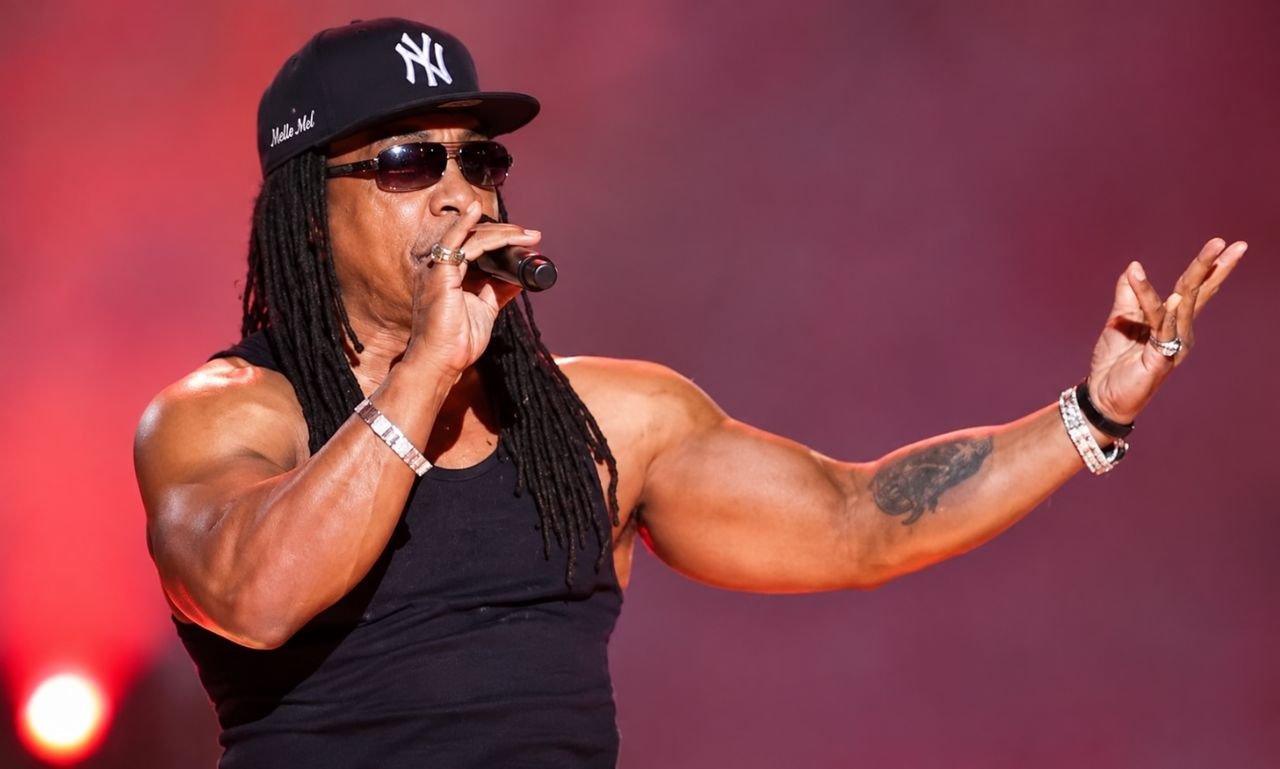
Melle Mel net worth in 2026 is estimated at $1.5 million, according to Celebrity Net Worth. The American rapper, songwriter, and hip-hop pioneer is best known for his influential work with Grandmaster Flash and the Furious Five. His contributions to classic records such as “The Message” and “White Lines (Don’t Do It)” helped shape the direction of hip-hop music.
Born Melvin Glover, Melle Mel became one of the defining voices of early rap. His career includes music recordings, live performances, collaborations, film appearances, and solo projects. However, his financial journey has not always reflected his enormous cultural influence. Like several early hip-hop artists, he has spoken publicly about royalty disputes and the difficulties of receiving fair compensation from record companies.
This article explores Melle Mel’s estimated wealth in 2026, his musical achievements, career earnings, income sources, personal background, and the financial challenges that influenced his career.
Melle Mel Quick Facts
| Category | Details |
| Real Name | Melvin Glover |
| Professional Name | Melle Mel / Grandmaster Melle Mel |
| Date of Birth | May 15, 1961 |
| Age in 2026 | 65 years |
| Birthplace | New York City, New York, USA |
| Nationality | American |
| Profession | Rapper and songwriter |
| Music Genre | Hip-hop and old-school rap |
| Career Began | Late 1970s |
| Famous Group | Grandmaster Flash and the Furious Five |
| Estimated Net Worth | $1.5 million |
| Main Career | Music and entertainment |
| Famous Songs | The Message, White Lines (Don’t Do It) |
| Major Recognition | Rock and Roll Hall of Fame induction |
| Solo Album | Muscles (2007) |
Note: The net worth figure is a third-party estimate, not a publicly verified financial statement.
What Is Melle Mel’s Net Worth in 2026?
Melle Mel has an estimated net worth of $1.5 million in 2026, based on the figure published by Celebrity Net Worth. This estimate reflects his long career as a rapper, songwriter, recording artist, and entertainer.
Although Melle Mel became famous during hip-hop’s earliest commercial years, his financial journey was different from that of many modern mainstream rappers. The music industry operated very differently in the late 1970s and early 1980s. Recording contracts, royalty arrangements, distribution systems, and artist management structures often left performers with limited control over their work.
Melle Mel’s success with Grandmaster Flash and the Furious Five established his reputation as one of rap’s most influential performers. However, commercial success and personal wealth are not necessarily the same thing.
A successful record can generate substantial revenue for record labels, publishers, distributors, and other rights holders without delivering an equivalent amount to the musicians who created it.
It is also important to understand that no independently audited public financial statement confirms Melle Mel’s total assets, liabilities, investments, or annual earnings. Therefore, the $1.5 million figure should be treated as a reported estimate rather than an exact measurement of his financial position.
Why Is Melle Mel’s Wealth Difficult to Calculate?
There are several reasons why determining the exact wealth of a veteran recording artist can be challenging. First, many early hip-hop recording agreements were negotiated before artists fully understood the long-term financial value of music ownership and publishing rights. Second, royalties can change depending on ownership arrangements, licensing agreements, distribution contracts, and the use of recordings across different platforms.
Third, artists may receive income from performances, collaborations, appearances, and other activities that are not publicly disclosed. For Melle Mel, these issues make it difficult to calculate his complete financial history from publicly available information.
Who Is Melle Mel?
Melle Mel is an American rapper and songwriter widely recognized as one of the pioneers of hip-hop. His real name is Melvin Glover, and he became famous as the lead vocalist and a key creative figure in Grandmaster Flash and the Furious Five. The group helped transform hip-hop from a local party culture into a powerful musical movement capable of addressing social issues.
During the late 1970s and early 1980s, rap music was still developing its commercial identity. Artists experimented with different lyrical styles, rhythms, DJ techniques, and performance approaches. Melle Mel became particularly important because of his strong vocal delivery and socially conscious lyrics.
His performance on “The Message” demonstrated that rap could communicate serious experiences involving poverty, urban life, economic hardship, and social inequality. The song became one of the most influential recordings in hip-hop history.
According to the Rock & Roll Hall of Fame, Grandmaster Flash and the Furious Five were the first rap group inducted into the institution. The group received this recognition in 2007. Melle Mel’s contribution to hip-hop therefore goes beyond record sales or financial success. His work helped establish the artistic foundation of an entire musical genre.
Early Life and Background
Melvin Glover was born on May 15, 1961, in New York City. He grew up in an environment where music and street culture played an important role in shaping the early hip-hop movement. During the 1970s, the Bronx became one of the central locations for the development of hip-hop. Young DJs and MCs organized neighborhood parties, experimented with sound systems, and developed new approaches to musical performance.
These gatherings helped create opportunities for aspiring performers to demonstrate their skills. Melle Mel became involved in this emerging culture while hip-hop was still developing its identity. His early experiences eventually brought him together with other performers who would become members of Grandmaster Flash and the Furious Five.
Rather than following the traditional path of established music performers, Melle Mel developed his reputation through live performances and recordings within the growing New York hip-hop community. His early background helped shape his lyrical approach, particularly his interest in social issues and everyday urban experiences.
There is limited reliable public information about his formal education and early family circumstances. For that reason, specific educational qualifications and unverified personal details should not be presented as established facts.
How Melle Mel Started His Music Career
Melle Mel began performing during the late 1970s, when hip-hop was becoming increasingly popular in New York. He became associated with Grandmaster Flash and the Furious Five, a group that included several important early rap performers.
The original lineup included:
- Grandmaster Flash (Joseph Saddler)
- Melle Mel (Melvin Glover)
- The Kidd Creole (Nathaniel Glover)
- Scorpio (Eddie Morris)
- Rahiem (Guy Todd Williams)
- Cowboy (Keith Wiggins)
The group began recording for Enjoy Records and released “Superrappin'” in 1979.
Their early recordings helped establish their reputation in the developing hip-hop scene. They later signed with Sugar Hill Records, one of the important record labels associated with early commercial rap music. The group released songs including “Freedom” and “The Birthday Party,” gaining attention among R&B and hip-hop audiences.
Their growing popularity created opportunities for touring, additional recordings, and performances. For Melle Mel, these early years represented the beginning of a professional music career that would eventually influence generations of rappers.
Career Breakthrough: The Message
One of the most important moments in Melle Mel’s career came in 1982 with the release of “The Message.” Recorded by Grandmaster Flash and the Furious Five, the song introduced a different approach to mainstream rap music.
Instead of concentrating exclusively on parties and entertainment, it explored the difficult realities of life in disadvantaged urban neighborhoods. Melle Mel’s vocal performance helped give the recording its distinctive emotional impact.
The lyrics addressed poverty, frustration, social inequality, and the pressures experienced by people living in challenging environments. “The Message” became a major turning point in hip-hop history. The Rock & Roll Hall of Fame describes the recording as a masterpiece that exposed the social realities behind a culture previously associated primarily with partying.
The song also became an important commercial and cultural success. It was later recognized by the Grammy Hall of Fame and the National Recording Registry. For Melle Mel, the recording established a lasting reputation as a socially conscious rapper.
Why The Message Was Important for His Career
The success of “The Message” contributed to Melle Mel’s professional reputation in several ways:
- It established him as a major lyrical voice in early hip-hop.
- It introduced socially conscious rap to a wider audience.
- It strengthened his identity as a songwriter and performer.
- It created opportunities for additional recordings and performances.
- It established a musical legacy that continues to influence modern hip-hop.
Although the recording became extremely influential, its cultural importance should not be confused with a specific amount of personal income for Melle Mel.
White Lines and Other Major Musical Successes
Following the success of “The Message,” Melle Mel continued developing his musical career. One of his best-known recordings was “White Lines (Don’t Don’t Do It),” released in the early 1980s. The song became an important hip-hop recording and addressed the dangers and consequences associated with drug use.
Its distinctive musical arrangement and memorable vocal performance helped establish its place in the history of early rap. Melle Mel also recorded music under the name Grandmaster Melle Mel and the Furious Five after disagreements and changes within the original group. Another important moment came in 1984 when he performed on Chaka Khan’s hit recording “I Feel for You.”
The collaboration introduced rap vocals to an even wider mainstream audience. Melle Mel also participated in the anti-apartheid recording “Sun City,” demonstrating his involvement in music with broader social and political messages. These recordings expanded his professional profile and helped him remain relevant during a period when hip-hop was rapidly changing.
How Does Melle Mel Make Money?
Melle Mel’s reported wealth is associated primarily with his long career in music and entertainment. However, the exact amount he receives from individual income sources is not publicly documented. The following activities represent known parts of his professional career, rather than verified current earnings.
1. Music Recordings and Royalties
Music recordings are an important part of Melle Mel’s professional legacy.
His work includes classic hip-hop records such as:
- The Message
- White Lines (Don’t Do It)
- Freedom
- Beat Street
- Step Off
- I Feel for You
Recorded music can generate revenue through streaming, licensing, physical sales, digital downloads, and other forms of distribution. However, the amount received by an individual performer depends on contractual arrangements and ownership of the relevant rights.
Melle Mel has publicly discussed the difficulties he experienced with early record contracts, making it especially important not to assume that the popularity of his recordings translated directly into substantial personal royalties.
2. Live Performances and Concerts
Live entertainment has historically been an important source of income for established musicians. Artists with recognizable songs and a strong musical legacy can receive performance fees for concerts, festivals, special appearances, and nostalgia events.
Melle Mel’s reputation as an early hip-hop pioneer gives him a distinctive place in the live entertainment industry. His association with Grandmaster Flash and the Furious Five also makes his music relevant to audiences interested in the origins of rap. Nevertheless, publicly available information does not establish his current performance fees, annual concert income, or total earnings from live appearances.
3. Music Collaborations
Melle Mel has worked with several prominent musicians throughout his career. His collaboration with Chaka Khan on “I Feel for You” was particularly significant. He also contributed to Quincy Jones projects, including the award-winning album “Back on the Block.”
Later collaborations included his appearance on Macklemore and Ryan Lewis’s “Downtown.” Collaborations can provide recording income, performance opportunities, and additional exposure. However, the financial terms of these projects have not been publicly established in a way that allows an accurate calculation of his personal earnings.
4. Solo Music Projects
Melle Mel continued working on music outside his original group. In 2007, he released his solo album “Muscles.” The album represented another chapter in his career and demonstrated his continued interest in recording music.
However, Celebrity Net Worth reports that the album and its single did not achieve significant chart success. It would therefore be inaccurate to assign substantial commercial earnings to this project without reliable sales or royalty information.
5. Film and Television Appearances
Melle Mel also expanded his professional activities beyond music recordings. He appeared in the 1984 hip-hop dance drama “Beat Street,” which featured several important performers from the emerging hip-hop scene.
The film helped introduce early rap culture to a broader entertainment audience. He later appeared in television and documentary projects, including “Bronx Flavor” and Ice-T’s documentary “Something from Nothing: The Art of Rap.” These appearances added to his entertainment career, although specific acting fees and television earnings are not publicly available.
6. Music-Related and Cultural Activities
Melle Mel’s reputation as a hip-hop pioneer has also made him an important figure in discussions about the history and development of rap music. His professional experience and influence provide opportunities for cultural appearances, interviews, events, and music-related projects.
These activities may contribute to an entertainer’s income, but there is insufficient public information to establish how much Melle Mel earns from them. For that reason, they should be considered possible professional activities rather than confirmed major sources of his current wealth.
Melle Mel’s Record Label and Royalty Disputes
An important part of understanding Melle Mel’s financial history involves the early hip-hop recording industry. During the late 1970s and early 1980s, many artists signed contracts without having the legal and financial support available to major performers today. The structure of these agreements could create problems involving recording advances, royalty calculations, music rights, and ownership.
Melle Mel discussed these challenges in a 2020 interview published by Pitchfork. He explained that early artists associated with Sugar Hill Records often faced difficulties receiving royalties. He recalled receiving recording advances of approximately $5,000 to $10,000. However, he described royalty accounting as unclear and explained that advances could be deducted from future royalty payments.
In some circumstances, artists could end up owing money rather than receiving the royalties they expected. This account provides useful context for understanding why an influential artist might not accumulate wealth equivalent to the popularity of his recordings. Pitchfork also reported that Melle Mel and other former Sugar Hill artists were involved in legal battles that resulted in royalty settlements during the early to mid-2000s.
According to the article, the companies associated with the Sugar Hill catalog subsequently made royalty payments following those settlements. This history highlights the difference between creating commercially successful music and receiving the financial benefits of owning or controlling that music. For Melle Mel, the issue is particularly relevant because “The Message” and “White Lines” remain important recordings in hip-hop history.
Melle Mel’s Awards and Achievements
Melle Mel’s greatest achievements are connected to his contribution to the development of hip-hop.
His work helped establish rap as a musical form capable of addressing important social issues while reaching mainstream audiences.
Some of his most notable achievements include:
Rock & Roll Hall of Fame (2007)
Grandmaster Flash and the Furious Five became the first rap group inducted into the Rock & Roll Hall of Fame. This recognition placed the group among the most influential performers in modern music history.
Grammy Awards
Melle Mel received two Grammy Awards for his contributions to Quincy Jones’s projects, including “Back on the Block” and “Q – The Autobiography of Quincy Jones,” according to the Yerba Buena Center for the Arts biography.
Influence on Socially Conscious Rap
His performance on “The Message” helped establish a new direction for hip-hop by addressing social realities rather than focusing exclusively on entertainment.
Hip-Hop Cultural Recognition
His music continues to be recognized as part of the foundation of early hip-hop. His influence extends to later generations of rappers and songwriters. These achievements demonstrate why Melle Mel’s cultural legacy is considerably larger than any single financial estimate of his wealth.
Melle Mel’s Personal Life and Family
Melle Mel has maintained a relatively private personal life compared with many contemporary entertainers. His professional identity has primarily been associated with music, songwriting, and the development of hip-hop culture.
His brother Nathaniel Glover, professionally known as The Kidd Creole, was also a member of Grandmaster Flash and the Furious Five. Their involvement in the same musical group connected the Glover family to one of the most important periods in early rap history.
Beyond these established details, reliable public information about Melle Mel’s private family circumstances is limited. There is also insufficient verified information to provide an accurate account of his personal property holdings, investments, or other financial assets.
For a financially responsible net worth article, it is better to acknowledge these limitations than to publish unverified information about his private life.
Does Melle Mel Own Businesses or Real Estate?
There is no sufficiently reliable public documentation establishing a major business portfolio or a specific real estate portfolio belonging to Melle Mel. Although he has participated in several music and entertainment projects, participation in a creative project does not automatically mean ownership of the associated business.
Similarly, an artist’s public profile does not establish that they own expensive properties, luxury vehicles, or other valuable assets. Celebrity Net Worth provides an overall wealth estimate but does not publish an independently verified breakdown of Melle Mel’s properties, investments, bank accounts, or liabilities.
Consequently, there is no sound basis for assigning specific monetary values to these categories. His music career remains the best-documented foundation of his professional and financial history.
Melle Mel’s Career Beyond the 1980s
Although Melle Mel achieved his greatest historical recognition during the early years of hip-hop, his career continued beyond the 1980s. He remained involved in music projects and collaborations, including recordings with other performers. In 1997, he worked with Scorpio on “Right Now.” In 2001, he was associated with the project “On Lock” under the name Die Hard.
His later work also included “The Portal in the Park,” a children’s book developed with author Cricket Casey in 2006. The project included an accompanying CD featuring Melle Mel’s narration and music. In 2007, he released his solo album “Muscles.”
He also appeared in Ice-T’s 2012 documentary “Something from Nothing: The Art of Rap,” which explored the history, creative process, and cultural significance of hip-hop. These activities demonstrate that Melle Mel’s career was not limited to his original recordings. He continued participating in projects that connected him with music, entertainment, and hip-hop history.
Melle Mel’s Influence on Modern Hip-Hop
Melle Mel’s influence can be understood through the way early rap developed into a worldwide musical industry. Before hip-hop became a major commercial genre, rappers often performed at local parties and community events. Their music was closely connected to DJs, street culture, and neighborhood experiences.
“The Message” helped demonstrate that rap could communicate deeper ideas through storytelling and social commentary. That approach influenced the development of conscious hip-hop and encouraged later performers to address subjects such as poverty, discrimination, economic inequality, and everyday struggles.
Melle Mel’s lyrical delivery also helped establish the role of the rapper as a central storytelling voice within a musical production. His influence is therefore connected not only to the songs he recorded but also to the artistic possibilities he helped establish for future generations.
Modern hip-hop has developed into a global business involving streaming services, touring, merchandising, publishing, and brand partnerships. Although Melle Mel’s financial circumstances cannot be directly compared with those of today’s highest-paid rappers, his contribution to the genre remains historically significant.
Melle Mel Net Worth Compared With His Cultural Legacy
A reported net worth of $1.5 million may appear modest when compared with the fortunes of many contemporary hip-hop stars. However, financial comparisons do not always reflect the importance of an artist’s contribution to music history. Today’s successful rappers can earn money through several business channels, including music streaming, merchandise, fashion companies, record labels, touring, and brand partnerships.
During Melle Mel’s early career, the commercial hip-hop environment was much smaller and the financial arrangements were different. Artists were building an entirely new genre without the established business structures that exist today.
His comments about early recording advances and royalty difficulties demonstrate some of the challenges faced by pioneering performers. His career is an example of why cultural influence, commercial success, and personal wealth should be evaluated separately. The historical significance of “The Message” and his contribution to the development of hip-hop cannot be measured through a bank balance alone.
Frequently Asked Questions About Melle Mel
1. What is Melle Mel’s net worth in 2026?
Melle Mel’s estimated net worth in 2026 is $1.5 million, according to Celebrity Net Worth. This is a third-party estimate rather than an officially confirmed financial figure. His wealth is associated primarily with his long career as a rapper, songwriter, recording artist, and entertainer.
2. What is Melle Mel’s real name?
Melle Mel’s real name is Melvin Glover. He is also known professionally as Grandmaster Melle Mel. He became famous as a leading vocalist and songwriter associated with Grandmaster Flash and the Furious Five.
3. What is Melle Mel most famous for?
Melle Mel is best known for his work on “The Message” and “White Lines (Don’t Don’t Do It).” His performance on “The Message” helped establish socially conscious rap and demonstrated how hip-hop could address important social and economic issues.
4. How does Melle Mel make his money?
His documented professional activities include music recordings, songwriting, collaborations, live performances, and entertainment appearances. However, his exact annual earnings and the amount generated by individual income sources have not been publicly verified.
5. Was Melle Mel part of Grandmaster Flash and the Furious Five?
Yes. Melle Mel was a key member of Grandmaster Flash and the Furious Five. The group became one of the most influential acts in early hip-hop and was inducted into the Rock & Roll Hall of Fame in 2007.
Conclusion
Melle Mel’s estimated net worth in 2026 is $1.5 million, according to Celebrity Net Worth. His financial journey reflects a long career in hip-hop, including recordings, collaborations, performances, and entertainment projects.
However, his greatest contribution is his influence on the development of rap music. Through landmark recordings such as “The Message” and “White Lines,” he helped establish hip-hop as a platform for storytelling and social commentary.
His experiences with early recording contracts also highlight the financial challenges faced by pioneering artists. Although his exact wealth remains unverified, Melle Mel’s place in music history is firmly established.
Related Posts
Michael Dell Net Worth 2026: How the Dell Technologies Founder Built His Fortune